Custom Metal Pendants: Material, Finish and Logo Options
Learn how to choose custom metal pendants for brand accessories, including materials, logo details, plating finishes, enamel colors, attachment methods and quality checks.
Ninco Factory
7/27/20265 min read
Custom metal pendants are used in brand products, including handbags, garments, keychains, gift items, promotional accessories and fashion collections. For B2B buyers, a pendant is not only a decorative part. It can carry a logo, identify a product line, support retail presentation and help the final product feel more complete.
Before ordering custom metal pendants, buyers should confirm the material, logo method, finish, size, thickness, attachment and packaging requirements. These details affect mold cost, sampling results, surface quality and bulk production consistency. This guide explains the practical points to review before sending a pendant design for quotation.
What Are Custom Metal Pendants Used For?
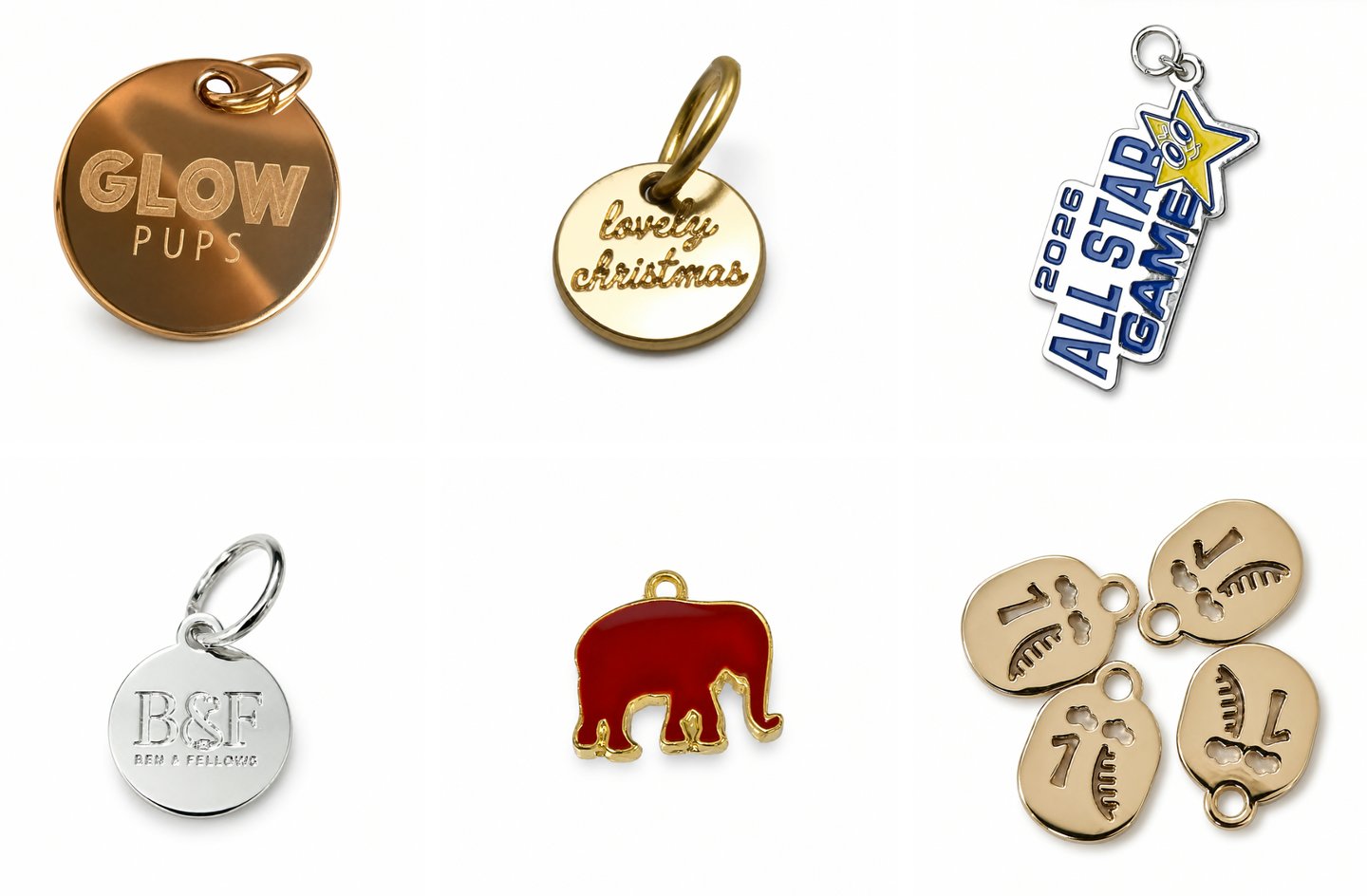
Custom metal pendants can be used as bag charms, brand tags, keychain accessories, garment trims, souvenir items, jewelry-style decorations and promotional gifts. Some buyers need a small logo charm for a handbag zipper. Others need a heavier metal pendant for gift packaging, a retail keychain or a brand accessory collection.
The final use should be confirmed early because it affects the production design. A pendant used on a handbag may need a strong jump ring or chain. A pendant used on clothing should not be too sharp or too heavy. A gift or promotional pendant may need individual packaging, barcode labels or a display card. When buyers explain the application clearly, the factory can suggest a more suitable structure.
For common product styles, Ninco Factory's custom metal pendants page can be used as a reference.
Choosing the Right Metal Material
Material choice should depend on design, weight, finish requirement, budget and use environment. Zinc alloy is commonly used for custom metal pendants because it works well for die casting, shaped outlines, raised logos, recessed areas and three-dimensional details. It is a practical choice for many OEM and ODM metal accessory projects.
Brass can create a more solid and refined feel, especially for premium brand accessories, stamped pendants and plated finishes. Stainless steel is harder and more corrosion-resistant, which makes it suitable for simple shapes, flat designs, laser marking or long-term use. Iron can be budget-friendly for some promotional projects, but rust protection and plating quality need attention. Aluminum may be considered when a larger pendant needs to stay lightweight.
There is no single best material for every project. A good choice balances the pendant's appearance, strength, weight and target price.
Logo Options for Custom Metal Pendants
Logo detail is one of the most important parts of a custom pendant. Common options include engraved logos, embossed logos, debossed logos, die cast 3D logos, laser marking, printed graphics and enamel-filled designs.
An embossed logo creates a raised surface and stronger three-dimensional effect. A debossed logo gives a recessed and more subtle look. Engraving and laser marking work well for cleaner lines and text. Enamel filling is useful when the brand logo needs specific colors. If the design includes several colors, each color area usually needs a clear metal boundary so the filling can be controlled.
Buyers should provide vector artwork when possible, such as AI, PDF, SVG or EPS files. Small letters, thin strokes, narrow gaps and complex gradients may need adjustment before mold making. It is better to solve these issues before sampling than to revise the mold later.
Plating and Surface Finish Options
The finish strongly affects how the pendant looks in the final product. Popular options include shiny gold, matte gold, nickel, silver, black nickel, gunmetal, rose gold, antique brass, antique copper and antique silver. Some projects may also use spray painting, electrophoresis or protective coating depending on the design and use environment.
Polished finishes look bright and reflective, but they require careful surface preparation because scratches and small defects are easier to notice. Matte finishes feel quieter and can suit fashion, outdoor or minimalist product lines. Antique finishes work well for vintage, craft or heritage-style brands because recessed areas appear darker while raised areas can be polished brighter.
Buyers should understand that plating colors can vary slightly between materials, batches and lighting conditions. If the pendant must match other hardware, such as custom metal tags, zipper pullers, buckles or chains, a reference sample is helpful.
Size, Thickness and Attachment Details
Pendant size should be chosen according to the final product. A small bag charm may need to stay light and easy to hang. A gift pendant or keychain accessory can be thicker and heavier if the buyer wants a stronger hand feel. Important specifications include length, width, thickness, hole size, edge shape, weight and whether the pendant is one-sided or double-sided.
Attachment is also important. Common options include jump rings, split rings, ball chains, lobster clasps, short chains, sewing holes and custom connectors. The hole position affects how the pendant hangs. If the hole is too close to the edge, the structure may become weak. If the hole is too small, it may not fit the selected ring or chain.
For bag, garment and retail accessory projects, buyers should test the sample on the real product whenever possible. This helps confirm the hanging angle, attachment strength, surface appearance and comfort.
Production and Quality Checks
Custom metal pendants often follow a process such as artwork review, drawing confirmation, mold development, sampling, polishing, plating, color filling, assembly, inspection and packaging. The exact process depends on the material and design. Zinc alloy pendants are often die cast, while brass, iron or stainless steel designs may use stamping, etching, laser marking or other methods.
Quality checks should include logo clarity, size, thickness, edge smoothness, plating surface, color consistency, enamel filling, epoxy surface, hole position, attachment strength and packaging condition. For bulk orders, the approved sample should be used as the main reference.
Packaging should not be treated as an afterthought. Plated metal pendants can scratch if packed loosely. Depending on the finish and sales channel, buyers may request individual OPP bags, paper cards, velvet pouches, retail boxes, SKU labels or export cartons.
FAQ
What is the best material for custom metal pendants?
Zinc alloy is suitable for many detailed custom pendants, especially shaped and 3D designs. Brass can feel more premium, stainless steel is durable, iron can suit budget-sensitive projects and aluminum is useful when weight matters. The best choice depends on the design and application.
Can I add a logo to both sides of a pendant?
Yes, many metal pendants can include front and back details. The factory should review the thickness, logo depth, mold structure and finish before confirming whether both sides can be produced clearly.
What artwork file should I provide?
Vector files such as AI, PDF, SVG or EPS are preferred. High-resolution PNG or JPG files can be reviewed first, but complex logos may need to be redrawn before mold development.
Can custom metal pendants use enamel colors?
Yes. Enamel filling is suitable for colored logos and recessed color areas. Buyers should provide Pantone references or color samples where possible, but final color should be confirmed by sample.
What should I prepare before requesting a quote?
Prepare the product use, logo file, target size, material preference, plating finish, color requirement, attachment method, quantity, packaging request and shipping country. Clear information helps the factory review the project more accurately.
Call to Action
Before starting a custom metal pendant order, prepare your logo file, size, material preference, finish requirement, attachment method and packaging request. If the design is not final, Ninco Factory can help review whether the shape, logo details and hanging structure are suitable for production.
You can send your artwork for a custom quote.
Contact
Get in touch for custom solutions.
CONTACT
Connect
lucy@nincofactory.com
© 2026 Ninco. All rights reserved.