How to Choose the Right Fixing Method for Custom Metal Labels | Ninco
Learn how to choose sewing holes, rivets, U-pins, screws, adhesive backing, chains and other fixing methods for custom metal labels.
6/25/20265 min read
The front of a custom metal label carries the logo, plating color and brand impression. The fixing method decides whether the label can actually be installed on the final product. For clothing brands, handbag brands, footwear brands, gift companies and OEM buyers, this detail should be confirmed before mold development.
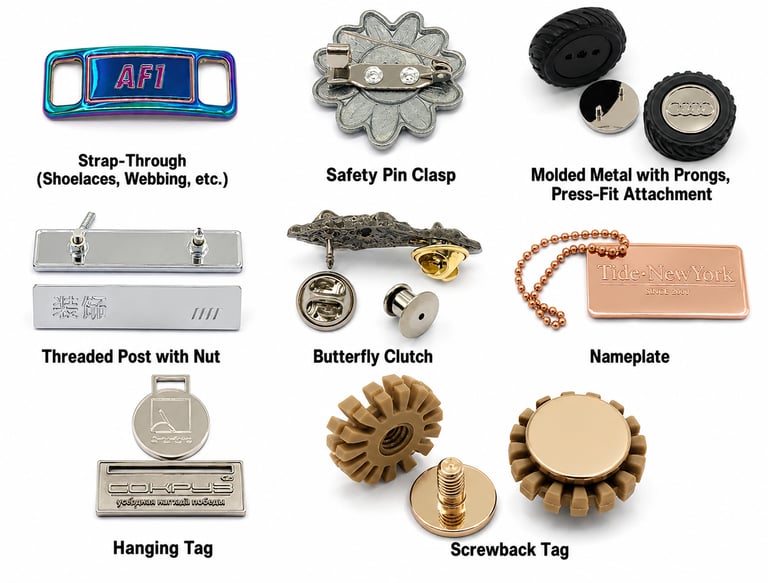
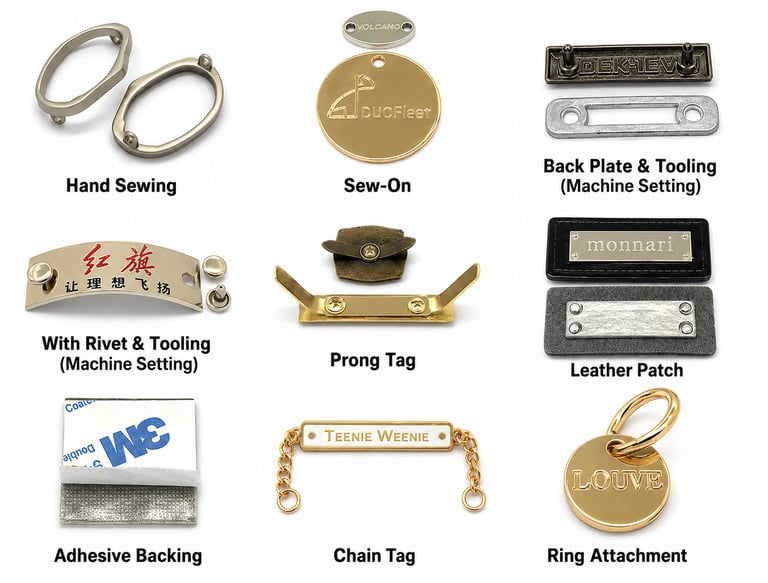
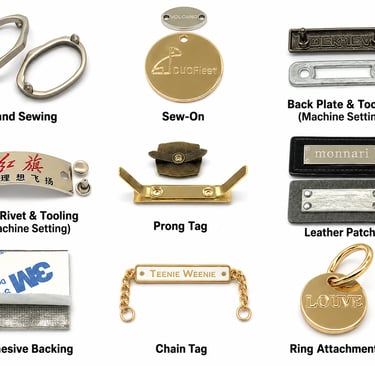
The two reference images show common installation options: hand sewing, sewing holes, machine-riveted back plates, rivets, insert feet, leather patch mounting, adhesive backing, chain clips, hanging rings, belt-through structures, brooch pins, press-fit feet, screw posts, butterfly clutches, hanging labels and threaded labels.
Start with the Final Product, Not the Label Alone
A metal label for a denim jacket, a handbag, a shoe upper and a promotional keychain may use the same logo, but the fixing structure should not be the same. Apparel often needs comfort and smooth edges. Handbags usually need stronger mechanical fixing. Shoes may need pressure-fit feet or structures that can handle friction. Gift accessories may use hanging rings, chains or keychain-style connections.
Before requesting a quote, buyers should tell the factory where the label will be used, what material it will attach to and how the final product will be assembled. Useful details include fabric or leather thickness, lining access and whether the part needs to be removable or permanent.
Ninco Factory's custom metal sewing labels page can be used as a reference for garment and bag label applications. The factory should still review the specific fixing method before confirming the mold.
Sewing Methods: Hand Sewing, Sewing Holes and Belt-Through Designs
Sewing is often suitable for garments, soft bags, hats, patches and lightweight accessories. In the reference image, hand-sewn styles and labels with sewing holes show two common approaches. A label may have side holes, top holes or long slots so thread can pass through.
For sewing structures, the hole position matters. If the hole is too close to the edge, the metal may become weak. If the hole is too small, sewing becomes slow. If the edge is rough after casting or plating, it may cut thread or damage fabric. Polishing, edge sanding and water grinding should leave the hole area clean and smooth.
Belt-through structures are another option. These are often used with shoe belts, webbing, ribbon, straps or woven tape. Instead of stitching through small holes, the strap passes through the metal part. Buyers should confirm strap width and thickness so the opening is not too tight or too loose.
Mechanical Fixing: Rivets, Back Plates, Insert Feet and Press-Fit Feet
For handbags, denim, leather patches and structured accessories, mechanical fixing is usually stronger than simple sewing. For U-pin labels, backing plates and handbag logo plates, see our Custom Metal Tags and Logo Plates options.The images show rivets, machine-riveted back plates, insert feet and metal parts with feet that can be pressed into position.
Rivet fixing can provide a solid hold, but it requires accurate hole spacing and correct installation pressure. If pressure is too high, the front surface or plating may be damaged. Back plates can help support the label from behind, especially when the product material is soft or layered.
Insert feet and press-fit feet are useful when the label must be positioned quickly during assembly. They are common on some bag, shoe and decorative hardware projects. Buyers should provide the material thickness and confirm whether the assembly factory has the right tools. A sample should be tested on the real material, not only on a flat desk.
Screw, Threaded and Clutch Structures
Screw posts and threaded labels are chosen when the buyer needs stronger or more serviceable fixing. In the reference image, screw-thread structures show how a metal label can connect with a threaded base. This can be useful for thicker materials, leather goods, decorative parts or products where a clean, secure hold is required.
Screw structures need enough space behind the product. Buyers should check whether the assembler can reach the back side and whether the screw length matches the material stack. Thread details must be stable after die casting, polishing and plating, so they should be discussed before mold making.
Butterfly clutches and brooch pin backs are different. They are often used for pins, badges, detachable labels, gift items and promotional accessories. They are not the first choice for permanent garment labels, but they work well when the metal item should be removable or wearable.
Decorative and Flexible Options: Leather Patches, Adhesive, Chains and Rings
Some labels are not attached directly to the product surface. A metal plate can be mounted on a leather patch first, then sewn or riveted to a garment or bag. This can make the label softer against fabric and can create a more premium trim effect. Buyers should check leather thickness, stitch position and whether the metal plate sits flat on the patch.
Adhesive backing can be useful for light decorative applications, temporary positioning or smooth surfaces, but it should be used carefully. It may not be enough for heavy metal parts, rough fabric, curved surfaces or products that face heat, moisture or repeated friction. If adhesive is required, the surface and expected use should be discussed clearly.
Chains, chain clips, hanging loops and hanging labels are useful for charms, tags, zipper areas, gift packaging, keychains and removable brand trims. Buyers should check chain strength, ring opening, plating consistency and scratch risk.
For related hanging accessories, Ninco Factory's custom metal tags and custom metal keychains pages can help buyers compare similar structures.
What to Confirm Before Mold Making
The fixing method affects the mold, not only the assembly step. Sewing holes, insert feet, screw posts, rivet points, slots and hanging loops must be designed into the metal part. Changing the fixing method after sampling may require mold revision.
Buyers should confirm the logo size, label thickness, fixing position, material thickness, finish, packaging and assembly process before opening the mold. If the part needs electroplating, enamel filling, spray painting or epoxy doming, the fixing structure should not interfere with those processes.
Sample approval should include installation testing. Check whether the label sits flat, whether the front surface is damaged during assembly, whether pins or feet bend, whether screws fit and whether chains or rings move smoothly. Packaging should protect raised posts, pins, rings and plated surfaces during shipping.
FAQ
What is the best fixing method for clothing metal labels?
Sewing holes, hand sewing and light flat structures are common for clothing. The best choice depends on fabric weight, label position, comfort and washing requirements.
What is the best fixing method for handbag metal labels?
Rivets, back plates, insert feet, screws or folding structures are often better for handbags because they provide stronger support on thicker materials.
Can adhesive backing be used for metal labels?
It can be used for some light decorative applications, but buyers should be careful with heavy parts, rough surfaces, curved materials and products exposed to friction or moisture.
When should a chain or hanging ring be used?
Chains and rings are suitable for hang tags, charms, zipper areas, keychains and removable brand trims. They should be checked for strength, plating consistency and scratch risk.
Can the fixing method be changed after the sample is made?
Sometimes, but it may require a new mold or mold revision. It is better to confirm the fixing method before mold development begins.
Call to Action
If you are developing custom metal labels, send your logo, product photo, material thickness, preferred fixing method and finish reference before sampling. Ninco Factory can review the structure, production process and assembly details, and you can request a custom quote for your project.
Contact
Get in touch for custom solutions.
CONTACT
Connect
lucy@nincofactory.com
© 2026 Ninco. All rights reserved.